Energy Storage Electromagnetic Unit Solution
A time-of-use electricity pricing heating solution combining an electromagnetic boiler with an energy storage water tank. It uses off-peak electricity to store heat and releases heat during peak and flat rate periods, reducing operation during high-price electricity periods. Suitable for heating and hot water projects in schools, office buildings, factories, parks, hotels, and hospitals in Northeast China. Energy savings should be calculated based on local electricity rates and actual heat load.
产品特性
产品描述
Energy Storage Electromagnetic Unit Solution
The Energy Storage Electromagnetic Unit Solution is a time-of-use electricity pricing heating system that uses an electromagnetic boiler as the heat source and an energy storage water tank as the heat storage device. Leveraging the price differences between peak, flat, and off-peak electricity rates, the system concentrates heating in the energy storage water tank during nighttime or off-peak periods. During the daytime flat and peak rate periods, heat from the water tank is released preferentially for heating or hot water supply, with the electromagnetic boiler only supplementing when heat is insufficient. This shifts a portion of electricity consumption from high-price periods to low-price periods.
This solution is suitable for projects in Harbin and the broader Northeast region—including schools, office buildings, factories, parks, hotels, bathhouses, and hospitals—that have stable heat loads and operate under time-of-use electricity pricing. Energy savings must be calculated on an hourly basis based on local electricity rates, building heat load, heating duration, and water tank capacity; fixed percentage savings should not be casually promised.
System Operating Principle
During off-peak electricity periods, the electromagnetic boiler starts up and heats the circulating water, which then flows into the energy storage water tank to complete heat storage. The water tank uses water as the heat storage medium, reduces heat loss through its insulation layer, and relies on the density difference between hot and cold water to form a temperature stratification, improving the utilization rate of available heat.
During peak or flat rate periods, the system preferentially draws heat from the energy storage water tank and delivers it to the heating terminals via plate heat exchangers, mixing devices, or circulation pump groups. When the remaining heat in the tank is insufficient, or during extreme cold weather or temporary load increases, the electromagnetic boiler automatically supplements heat to ensure continuous and stable heating supply.
System Components
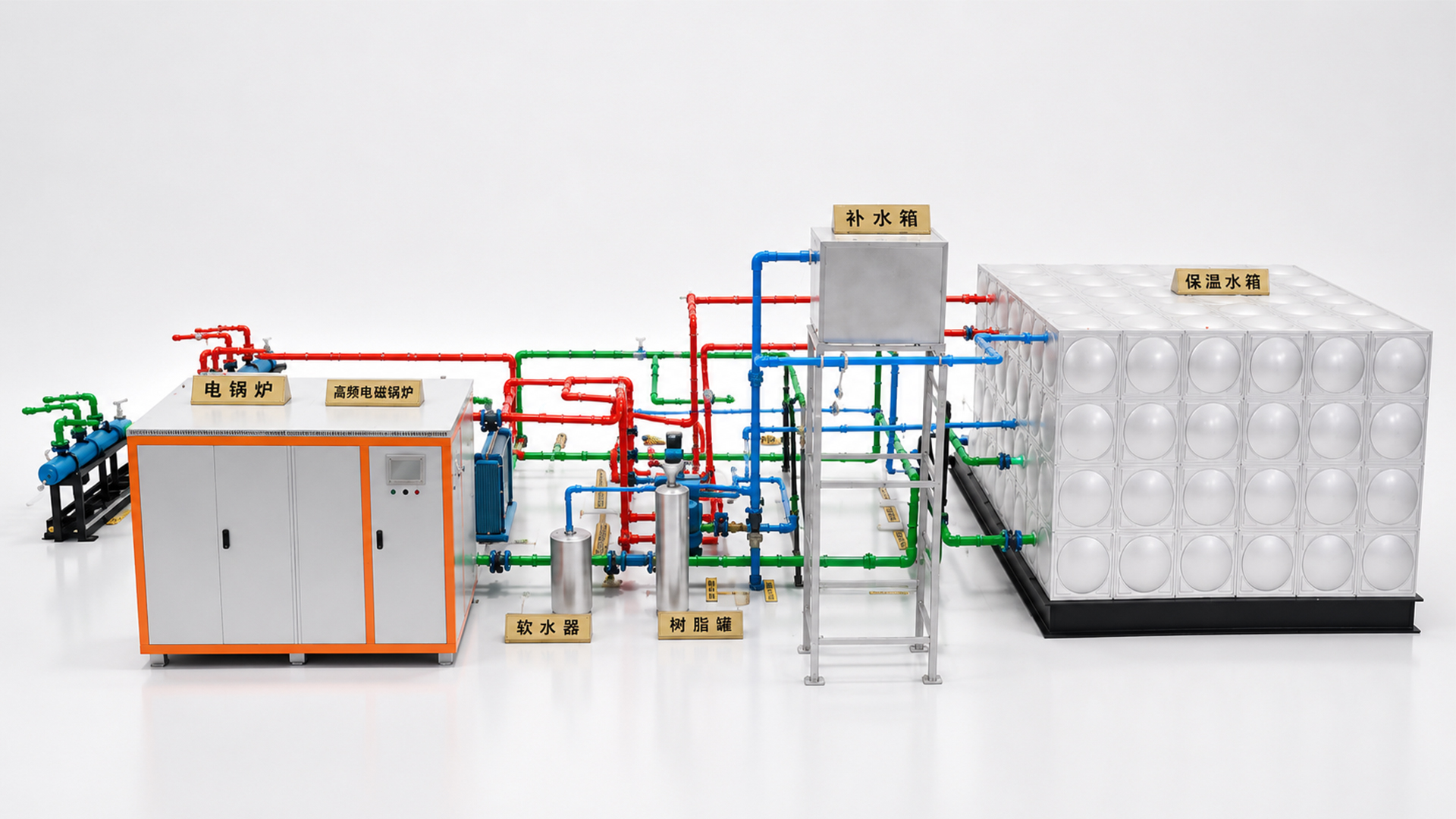
Electromagnetic Boiler Unit: Uses high-frequency electromagnetic induction heating, with water and electricity separation, fast start-stop response, and stepped or variable frequency load regulation.
Energy Storage Water Tank: The tank volume is configured according to the building heat load and off-peak heating duration, with an external insulation layer to reduce heat loss from nighttime storage to daytime release.
Heat Exchange and Mixing System: Delivers a stable output temperature suitable for radiators, underfloor heating, fan coil units, or process hot water as required.
Circulation Pump Group: Includes heat storage circulation, heat release circulation, and terminal circulation, with optional variable frequency control to improve hydraulic system stability.
PLC Smart Control Cabinet: Built-in control logic for time-of-use periods, storage temperature, outdoor temperature compensation, fault alarms, and remote monitoring.
Water Makeup, Pressure Holding, and Safety Components: Includes water makeup, venting, pressure relief, filtration, temperature and pressure monitoring, and other supporting devices.
Typical Operating Modes
Operating Mode Time Period Equipment Status Function Off-Peak Heat Storage Off-peak electricity rate period Electromagnetic boiler operates; water tank heats up for storage Converts low-price electricity into stored heat Flat-Rate Heat Supplement Flat electricity rate period Water tank provides heat primarily; boiler supplements as needed Ensures continuous heating and controls operating costs Peak Heat Release Peak electricity rate period Energy storage water tank releases heat preferentially Reduces boiler operation during high-price periods Extreme Cold Compensation Low-temperature cold snaps or temporary load increases Boiler and water tank supply heat jointly Ensures stable heating supply during Northeast winters
Energy and Cost-Saving Logic
The core of the Energy Storage Electromagnetic Unit is not "supplying less heat," but "shifting the time of electricity use." For the same amount of heat supply, if all electricity is consumed by an electric boiler directly during daytime high-price periods, the operating cost will be higher. If a larger proportion of electricity is shifted to the nighttime off-peak period to complete heat storage and then released during the day, the comprehensive electricity cost can be reduced by utilizing the peak-valley price spread.
Actual savings depend on four factors: the local peak-flat-off-peak electricity price spread, the hourly building heat load, the available off-peak heat storage duration, and the effective volume of the energy storage water tank. Jingyu Thermal Energy can calculate and recommend the boiler capacity, water tank tonnage, and estimated operating costs based on the user's electricity bill, building area, terminal form, and historical energy consumption data.
Northeast Region Adaptive Design
Low-Temperature Margin: Outdoor temperatures in Harbin winters are low; extreme cold day heat loads and continuous low-temperature safety margins must be considered during selection.
Freeze Protection and Insulation: Water tanks, pipes, valves, and outdoor pipelines require enhanced insulation, with electric trace heating and freeze protection circulation configured when necessary.
Stratified Utilization: The energy storage water tank should optimize water inlet and outlet positions and flow guiding structures to reduce mixing of hot and cold water and increase available heat.
Smart Scheduling: The PLC automatically adjusts heat storage temperature and heat supplement strategies based on time-of-use periods, outdoor temperature, and return water temperature.
Multi-Unit Parallel Operation: Large-area projects can adopt multiple electromagnetic boilers in parallel with staged start-up, reducing the impact of a single unit failure on the system.
Application Scenarios
Schools and Office Buildings: With low nighttime heat loads, off-peak electricity can be concentrated for heat storage and released during the day for heating.
Factories and Parks: Suitable for projects with large heating areas, long operating hours, limited distribution capacity, or a desire to reduce peak-period electricity costs.
Hotels, Bathhouses, and Hospitals: Can combine heat storage with domestic hot water demand to meet morning and evening peak usage.
Coal-to-Electricity and Clean Heating Retrofits: With no combustion, no chimney, and no on-site emissions, suitable for urban or park projects with high environmental requirements.
Technical Parameter Recommendations
Heat Source Form Electromagnetic boiler unit Heat Storage Medium Water / Antifreeze (per project requirements) Boiler Capacity Selected based on heat load; multiple units can be paralleled Energy Storage Water Tank Volume Calculated based on storage duration, supply-return water temperature difference, and building load Storage Temperature Atmospheric hot water systems typically not exceeding 95°C; determined by system design Heating Terminals Radiators, underfloor heating, fan coil units, domestic hot water heat exchange, process hot water, etc. Control Method PLC smart control, supporting time-period operation, temperature compensation, and remote monitoring Operating Strategy Off-peak heat storage, flat-rate heat supplement, peak heat release, extreme cold joint heating
Solution Implementation Process
Collect project building area, terminal form, heating duration, electricity bill, and existing energy consumption data.
Calculate the hourly heat load and determine the electromagnetic boiler capacity and effective energy storage water tank volume.
Design the hydraulic system, heat exchange system, control strategy, and equipment layout plan.
After installation and commissioning, optimize the off-peak heat storage temperature and daytime heat release strategy based on actual operating data.
Note: The Energy Storage Electromagnetic Unit Solution is a project-based system. Final configuration and savings calculations must be based on on-site conditions, local electricity pricing policies, and the user's actual heat consumption curve. Jingyu Thermal Energy can provide solution design, equipment manufacturing, installation and commissioning, and after-sales operation and maintenance services for users in the Northeast region.
服务热线
18686730186