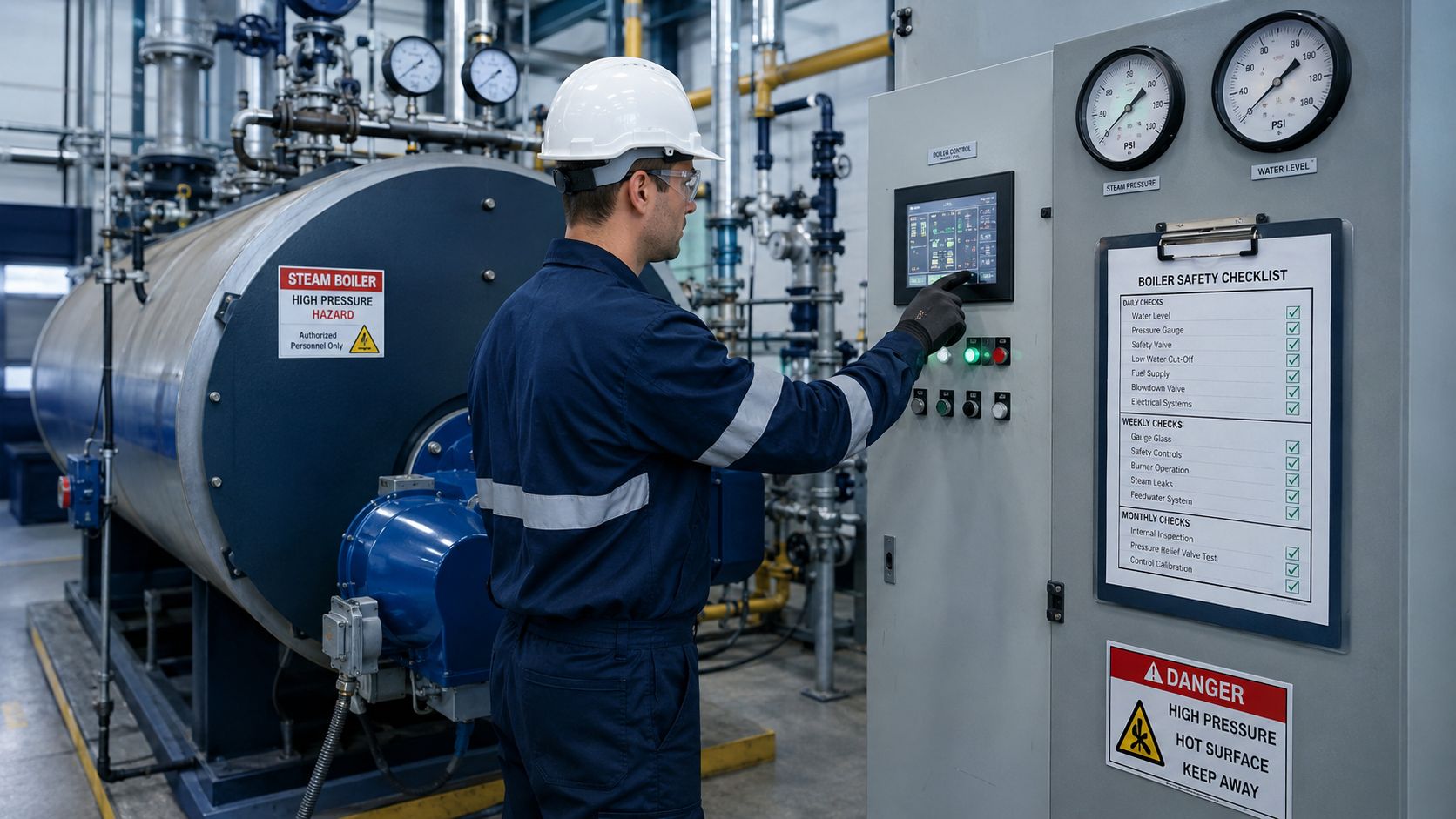
Complete Guide to Safe Steam Boiler Operation: A Detailed Analysis of Standard Procedures from Startup, Operation to Shutdown
2026-07-02行业资讯
Complete Guide to Safe Steam Boiler Operation
Steam boilers are classified as special equipment, and their operational safety directly affects personnel safety and property. This guide is compiled in accordance with the "Boiler Safety Technical Regulations" (TSG 11) and the "Boiler Operating Procedures," and applies to standardized operation of industrial steam boilers.
I. Pre-Startup Safety Inspection (Must Be Verified Item by Item)
1. Boiler Body Inspection
- Check whether there are any residues inside the furnace and whether the refractory material is intact
- Check whether the manhole and handhole seals are tight
- Check whether all valves (main steam valve, feedwater valve, blowdown valve, vent valve) are flexible and whether the handwheels are intact
- Confirm that safety valves, pressure gauges, and water level gauges are within the validity period of calibration
2. Water System Inspection
- Softened water tank level is normal, water quality is qualified (hardness ≤ 0.03mmol/L)
- Feedwater pump operates normally, backup pump can be switched at any time
- Water level gauge is clear, high and low water level alarms are functioning
3. Fuel and Combustion System
- Gas-fired boiler: Check gas pressure, leak detection alarm device, emergency shut-off valve
- Oil-fired boiler: Check oil level, oil pump, filter
- Coal/biomass boiler: Check grate, feeding system operation
4. Ventilation System
- Confirm that induced draft fan and forced draft fan operate normally
- Flue is unobstructed, no ash accumulation or blockage
- Purging time: No less than 3 minutes for gas-fired boilers, no less than 5 minutes for coal/biomass boilers
II. Startup and Pressure Build-Up Operation
- Water Filling: Inject softened water into the boiler to above the lowest safe water level. The temperature difference between the feedwater and the boiler body shall not exceed 50°C. Water filling time shall be no less than 1 hour in summer and no less than 2 hours in winter. In Northeast China's winter, the boiler body temperature may drop to as low as -20°C, and the feedwater temperature should be preheated to 30-40°C first.
- Ignition: After starting the induced draft fan for purging, ignite according to operating procedures. For gas-fired boilers, the ignition must come before opening the gas valve; it is strictly prohibited to open the gas valve before ignition.
- Slow Pressure Build-Up: Control the pressure build-up rate at 0.05-0.1 MPa/min. During pressure build-up, check whether there is any leakage at sealing surfaces.
- Pipe Warming and Steam Connection: When the pressure rises to 0.1-0.15 MPa, flush the water level gauge; when it rises to 0.2-0.3 MPa, tighten the manhole and handhole bolts; when it reaches 60% of working pressure, perform pipe warming operation.
III. Safety Monitoring During Normal Operation
| Monitoring Item | Normal Value | Alarm Value | Emergency Shutdown Value |
|---|---|---|---|
| Water Level | 1/2-2/3 of water level gauge | High/low water level alarm | Severe water shortage or flooding |
| Steam Pressure | ≤ Working pressure | ≥ Working pressure | ≥ 1.05 times working pressure |
| Flue Gas Temperature | 150-200°C | > 220°C | > 280°C |
| Feedwater Hardness | ≤ 0.03 mmol/L | > 0.03 mmol/L | — |
| Boiler Water Alkalinity | 6-26 mmol/L | < 6 or > 26 | — |
IV. Boiler Shutdown Operation
Normal Shutdown
- Gradually reduce the load and decrease fuel quantity
- Continue ventilation for 5-10 minutes after combustion stops to remove residual combustible gases
- Close the main steam valve and open the superheater drain valve
- Allow natural cooling to room temperature (no less than 8 hours) before draining water
- After draining, open manholes and handholes for ventilation and drying
Emergency Shutdown (Execute immediately if any of the following situations occur)
- Severe water shortage in the boiler (water level is no longer visible on the water level gauge)
- Boiler flooding (water level has exceeded the upper visible edge of the water level gauge)
- All water level gauges have failed
- Boiler overpressure, safety valve fails to open and pressure continues to rise
- Boiler components damaged, endangering safe operation
- Combustion equipment damaged, furnace wall collapsed, etc.
V. Special Winter Precautions for Northeast China
- Anti-Freezing: When the indoor temperature falls below 0°C during boiler shutdown, the water in the boiler and pipelines must be drained completely. Electric heat tracing should be configured for feedwater pipelines and instrument lines.
- Cold Boiler Startup: Cold boiler startups in Northeast China's winter must strictly follow the temperature rise curve; rapid temperature rise is strictly prohibited. It takes at least 4-6 hours for the boiler body temperature to rise from -20°C to working temperature.
- Water Quality Management: Groundwater hardness in Northeast China is generally high (200-500 mg/L). Softening water equipment must operate normally, and it is recommended to test the effluent hardness once daily.
- Ventilation Anti-Freezing: The induced draft fan inlet may freeze due to low temperatures. Check whether the impeller can rotate freely before startup.
Legal Notice: Steam boilers are classified as special equipment. Operators must hold the "Special Equipment Operator Certificate" (Boiler Operation Category) issued by the Market Supervision Administration, which is valid for 4 years. Operating without certification is illegal.