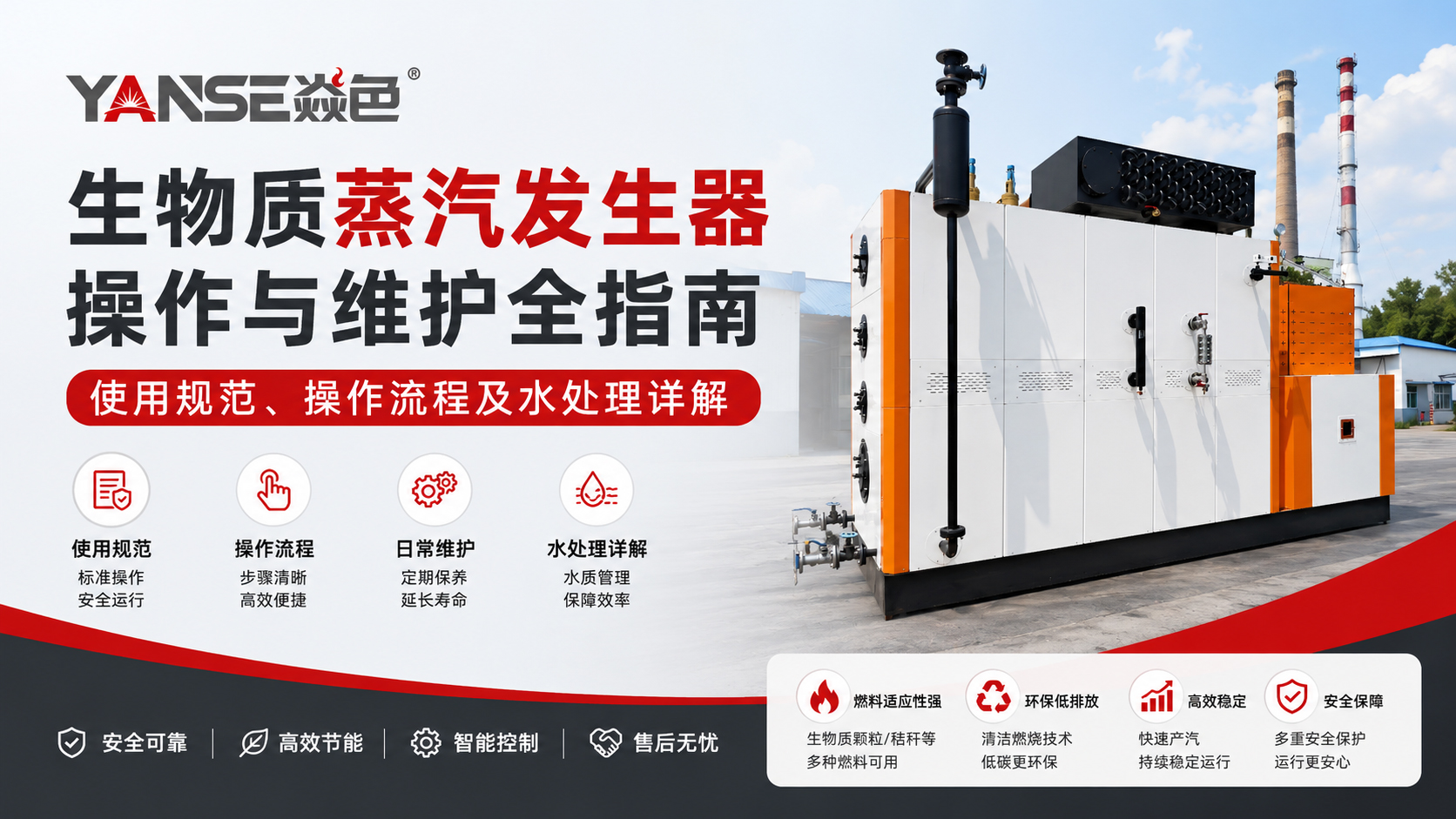
Complete Guide to Biomass Steam Generator Operation and Maintenance: Usage Specifications, Operating Procedures, and Water Treatment Explained
Complete Guide to Biomass Steam Generator Operation and Maintenance
Biomass steam generators are widely used in major northeastern agricultural provinces of China due to their advantages of low fuel costs (only 1/3 of natural gas) and carbon-neutral emissions. However, the unique characteristics of biomass fuel mean that its operation and maintenance differ significantly from traditional boilers, and standardized operation is essential for safe and efficient performance.
I. Pre-Startup Inspection
Water System Inspection: Confirm that the softened water tank has a normal water level, the feedwater pump is operating normally, and all valves are in the correct positions. Check whether the water level gauge is clearly visible and whether the high and low water level alarms are functioning properly.
Fuel Inspection: Ensure the hopper contains sufficient fuel, with moisture content controlled within 15% (when squeezed by hand it should not form a lump and should crumble when released). Excessive moisture content will lead to incomplete combustion and reduced steam output.
Ash Removal System: Empty the ash box and check whether the screw ash conveyor is operating normally.
Safety Accessories: Check the calibration validity periods of the safety valve, pressure gauge, and water level gauge to confirm they are all within their validity dates.
Flue Gas System: Check that the induced draft fan is operating, the flue is unobstructed, and the dust collector is working properly.
II. Startup Operating Procedures
Water Filling: Start the feedwater pump to fill water into the furnace to the normal water level.
Ignition: Start the induced draft fan for a 3-5 minute pre-purge, then activate the ignition device and feeding system. The ignition temperature of biomass fuel is approximately 250-300°C, requiring sufficient ignition time.
Temperature and Pressure Increase: After successful ignition, maintain a low fire for 30-60 minutes for gradual temperature rise. Rapid pressure increase is strictly prohibited. The pressure increase rate should be controlled within 0.05 MPa/min.
Steam Connection: When steam pressure approaches the working pressure, slowly open the main steam valve to warm the pipe before connecting to the pipeline network. Adequate drainage must be performed before steam connection to prevent water hammer.
III. Key Monitoring Points During Operation
Water Level Control: Maintain the water level between 1/2 and 2/3 of the normal range. It is strictly prohibited to fall below the minimum safety water level or exceed the maximum safety water level.
Combustion Status: Observe the flame color—normal should be golden yellow; a reddish color indicates insufficient air, while a whitish color indicates excessive air. Maintain the optimal air-fuel ratio by adjusting the damper.
Exhaust Gas Temperature: Normal exhaust gas temperature is 150-180°C. If it exceeds 200°C, ash removal should be performed promptly. For every 20°C increase in exhaust gas temperature, thermal efficiency decreases by approximately 1%.
Pressure Stability: Fluctuation range should not exceed ±0.05 MPa, automatically controlled by adjusting feed rate and air volume.
Ash Removal: Remove ash every 4-6 hours to prevent ash accumulation from affecting combustion.
IV. Furnace Shutdown Operations
Normal Shutdown: First stop the feeding system. After the fuel on the grate is burned out, stop the induced draft fan. Allow natural cooling to room temperature (approximately 8-12 hours) before draining water.
Emergency Shutdown: In cases of severe water shortage, overfilling, or overpressure, immediately cut off the feed and power supply, and open the safety valve to release pressure. Investigate the cause only after the furnace body has cooled down.
V. Water Treatment—The Key to Extending Service Life
Water treatment for biomass steam generators directly affects equipment service life and operating efficiency:
Feedwater Standards: Softened water must be used, with hardness ≤0.03 mmol/L, pH value of 7-9, and dissolved oxygen ≤0.1 mg/L.
Regular Blowdown: Perform blowdown at least once per shift to discharge sediment and high-concentration salts from the boiler water. Blowdown volume should be approximately 3%-5% of evaporation volume.
Water Quality Testing: Test boiler water alkalinity (6-26 mmol/L) and total dissolved solids (<3500 mg/L) weekly. When standards are exceeded, blowdown volume must be increased and water replenishment performed.
Special Considerations for the Northeast: When the furnace is shut down for more than 48 hours in winter, the boiler water must be drained completely to prevent freezing-induced cracking of the furnace body and piping. For long-term shutdown, nitrogen charging protection should be applied to prevent corrosion.
VI. Common Fault Handling
Fault Phenomenon | Possible Cause | Treatment Method
Insufficient steam output | High fuel moisture content/Insufficient air/Soot buildup on heating surface | Replace with dry fuel/Adjust damper/Clean soot
Black smoke from exhaust | Insufficient air/Damp fuel | Increase air intake/Replace with dry fuel
Grate jamming | Foreign object stuck/Chain too loose | Stop machine for cleaning/Tighten chain
Safety valve lifting | Overpressure operation/Safety valve set value too low | Reduce pressure operation/Calibrate safety valve
Reminder: Operators must undergo professional training and hold a special equipment operator's certificate. During winter operation in the Northeast region, it is essential to ensure proper freeze protection and insulation for outdoor piping and water treatment equipment.