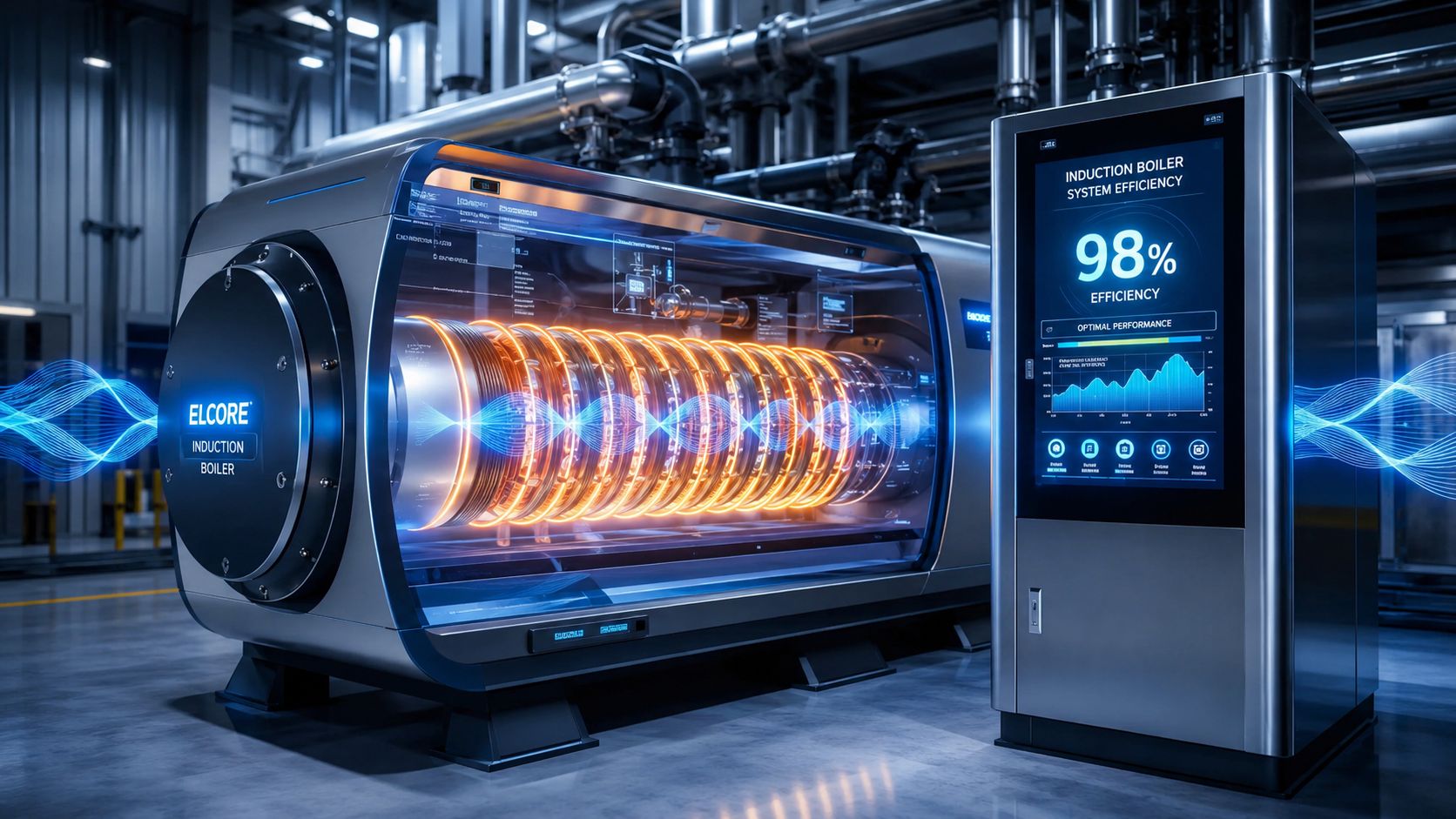
Electromagnetic Boilers vs Traditional Boilers: An Analysis of the Technological Transformation from 'External Heat Transfer' to 'Internal Self-Heating'
From External Heat Transfer to Internal Self-Heating: The Technological Revolution of Electromagnetic Boilers
The Heat Transfer Dilemma of Traditional Boilers
Whether coal-fired, gas-fired, or resistance-type electric boilers, their core heat transfer principle is "external heat transfer"—the heat source (flame or heating wire) first heats the metal wall, which then transfers heat to the water. This indirect heat transfer method has two inherent flaws:
- Heat Transfer Efficiency Bottleneck: Heat must penetrate the metal wall to reach the water side, creating a temperature difference between both sides of the wall and resulting in irreversible heat loss during the transfer process. The thermal efficiency of resistance-type electric boilers typically ranges from 95% to 97% and cannot break through this limit.
- Localized Overheating and Scaling: The surface temperature of heating wires can reach 300-500°C, causing calcium and magnesium ions in the water to rapidly precipitate and form scale on the high-temperature surface. Just 1mm of scale reduces thermal efficiency by 5%-8%, and as scaling worsens, a vicious cycle forms, ultimately burning out the heating wire.
The Breakthrough in Electromagnetic Induction Heating Principles
Electromagnetic boilers adopt the principle of electromagnetic induction heating, completely subverting the "external heat transfer" model:
- Working Principle: High-frequency alternating current passes through the induction coil to generate an alternating magnetic field. The metal boiler body within the magnetic field generates induced eddy currents, and the Joule heating effect of these eddy currents causes the boiler body itself to heat up, directly transferring heat to the water inside.
- "Internal Self-Heating": Heat is generated within the metal body of the boiler, not transferred from the outside. The inner wall temperature of the boiler is only 10-20°C higher than the water temperature, far lower than the several-hundred-degree high temperatures of heating wires.
- Water-Electricity Separation: The induction coil is completely isolated from water; current flows only through the coil with no electrically charged components in the water, completely eliminating the risk of electric leakage.
Performance Comparison
| Comparison Item | Resistance-Type Electric Boiler | Electromagnetic Boiler |
|---|---|---|
| Thermal Efficiency | 95%-97% | ≥98% (long-term stable) |
| Heating Surface Temperature | 300-500°C | Only 10-20°C higher than water temperature |
| Scaling Speed | Fast (accelerated by high temperature) | Extremely slow (suppressed by low temperature) |
| Thermal Efficiency Decline After 3 Years | Drops to 85%-90% | Maintains ≥97% |
| Heating Tube Lifespan | 2-4 years | Over 15 years (boiler body lifespan) |
| Safety | Heating wire submerged in water | Complete water-electricity separation |
| Operating Noise | ≤45dB | ≤35dB |
Special Value for the Northeast Region
The heating season in the Northeast region lasts up to 180 days, with boiler continuous operation time far exceeding that of southern regions. The efficiency decline caused by scaling in resistance-type boilers is particularly prominent in the Northeast—many users report noticeably increased electricity bills after 2-3 years of use. The "low-temperature heating surface" characteristic of electromagnetic boilers fundamentally inhibits scaling, making them suitable for long-term continuous operation in the Northeast. Water hardness in the Harbin area generally ranges from 200-400mg/L, making the anti-scaling advantage of electromagnetic boilers even more significant.
Conclusion
Electromagnetic boilers are not simply an "upgraded version of electric boilers" but represent a fundamental transformation in heat transfer principles. For enterprises and institutions in the Northeast with long-term stable heating needs, the comprehensive full lifecycle cost of electromagnetic boilers is far lower than that of traditional resistance-type electric boilers.